Uncovering the Unknown: A Comprehensive Comparison of Bitcoin and Fiat Money
- John Quinby
- Dec 16, 2024
- 4 min read

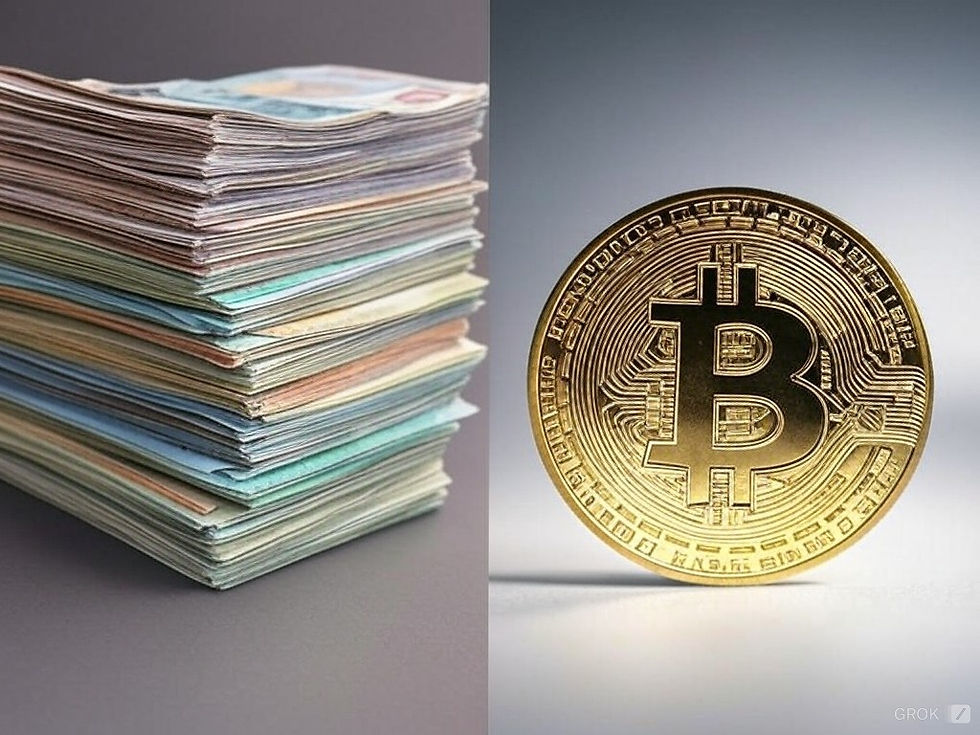
The rise of cryptocurrencies, especially Bitcoin, has transformed the financial landscape over the past decade. This digital currency has sparked global discussions about the future of money and its potential to replace traditional fiat currencies. Bitcoin introduces unique features that challenge conventional perceptions of how we use and think about money. In this post, we will explore the fundamental differences between Bitcoin and fiat money by examining issues of issuance, control, anonymity, financial inclusion, and various use cases.
Issuance
A key difference between Bitcoin and fiat money is how they are issued.
Fiat money, such as the US dollar or euro, is managed by central banks. These institutions can implement monetary policy, which includes actions like adjusting interest rates or controlling inflation. For example, during the 2008 financial crisis, the US Federal Reserve increased the money supply by over 300% to stimulate the economy, which raised concerns about hyperinflation.
On the other hand, Bitcoin is created through a process called mining, where powerful computers solve complex mathematical problems. The total supply of Bitcoin is capped at 21 million coins, which creates inherent scarcity. This limit differs from fiat, where the money supply is effectively unlimited. For instance, since its inception in 2009, over 19 million Bitcoins have been mined, showcasing a diminishing supply that continues to gain interest among investors.
This capped supply often leads supporters to label Bitcoin as "digital gold," suggesting it can protect against inflation and currency devaluation.
Control
Control remains another vital area of distinction between Bitcoin and fiat currencies.
Fiat money is regulated by central banks and governments, allowing them to implement and enforce policies smoothly. However, this centralization comes with its pitfalls. Political influences and decisions can significantly impact the value of a currency. For example, Venezuela has experienced hyperinflation, with its inflation rate reaching an astonishing 2,700%, causing the national currency to become nearly worthless.
Conversely, Bitcoin operates on a decentralized network of computers, which means no single authority governs it. Users enjoy control over their transactions and assets, appealing to those advocating for financial freedom. However, this decentralization also results in market volatility. In 2021, Bitcoin's price fluctuated dramatically, dropping from around $64,000 to just under $30,000 within a few months.
The difference in control dynamics between Bitcoin and fiat showcases a wider debate about the implications of decentralized finance.
Anonymity
The issue of anonymity in financial transactions is becoming increasingly significant in today’s digital age.
Fiat money transactions are generally linked to identifiable individuals, as banks adhere to strict Know Your Customer (KYC) regulations. These rules often require thorough documentation, leading to privacy concerns. As of 2020, the average cost per data breach was around $3.86 million, highlighting the vulnerabilities in storing personal information.
Bitcoin offers a different approach. While transactions are recorded on a public blockchain, the identities behind wallet addresses remain pseudonymous. Users can conduct transactions without needing to disclose their personal information linked to bank accounts, appealing to privacy-conscious individuals. However, this anonymity can facilitate illicit activities, raising red flags for regulators.
Financial Inclusion
Financial inclusion presents a compelling argument for Bitcoin's potential impact on underbanked and unbanked populations.
Access to fiat currencies often requires a bank account, which can be a barrier for many, particularly in developing nations where banking infrastructure can be lacking. The World Bank estimates that around 1.7 billion adults globally do not have access to a bank account.
In contrast, Bitcoin allows anyone with internet access to participate in financial transactions using a digital wallet. Several projects are using Bitcoin to improve financial access, targeting remittance services and microloans. According to a report from the Cambridge Centre for Alternative Finance, the use of cryptocurrency for remittances could save migrant workers an estimated $40 billion in fees annually, allowing users to retain more value in their transactions.
This potential for financial inclusion marks Bitcoin as a powerful tool for economic empowerment.
Use Cases
The versatility of Bitcoin has led to various innovative use cases beyond being a mere currency.
One notable application is in remittances. Conventional remittance services often charge fees as high as 6-10% and involve lengthy processes. In comparison, Bitcoin transactions can occur almost instantaneously with minimal fees, making it an appealing option for individuals sending money across borders. For example, some Bitcoin transactions can incur fees under $1, significantly reducing costs.
Additionally, Bitcoin has gained traction as an investment asset. A survey conducted by Fidelity in 2021 showed that 52% of institutional investors view cryptocurrencies, including Bitcoin, as an essential part of their portfolios. Investors increasingly look to Bitcoin as a hedge against inflation and consider it a non-correlated asset capable of diversifying investment portfolios.
Furthermore, Bitcoin supports micropayments and fundraising via Initial Coin Offerings (ICOs), demonstrating its potential to disrupt various industries. This adaptability showcases the growing importance of digital assets in today's economy.
Comparing Community Sentiments
The cultural attitudes toward Bitcoin and fiat money reflect broader shifts in societal views on finance.
Fiat money enjoys the backing of legal and political systems and typically comes with a level of trust, especially in stable economies. However, recent economic crises and inflation have led many individuals to question this trust.
Bitcoin, with its emphasis on decentralization and transparency, resonates with those seeking alternatives to established financial institutions. The community around Bitcoin has grown significantly. For instance, as of 2023, there are over 300 million Bitcoin wallets in existence, indicating rising public interest. While many Bitcoin advocates embrace the decentralized nature of this currency, skeptics are concerned with environmental sustainability and volatility.
Navigating the Financial Future
The comparison between Bitcoin and fiat money uncovers a complex landscape of finance. Examining the aspects of issuance, control, anonymity, financial inclusion, and various use cases reveals that both types of currency have distinct advantages and challenges.
As the financial landscape evolves, understanding these differences is crucial for informed decision-making. The future will likely see a coexistence of Bitcoin and fiat money, each serving specific purposes while reshaping our economic interactions.
In this process of financial innovation, assessing risks, rewards, and motivations for choosing one currency over another remains vital. Embracing both systems could pave the way for a more inclusive and transparent financial future.


Comments